
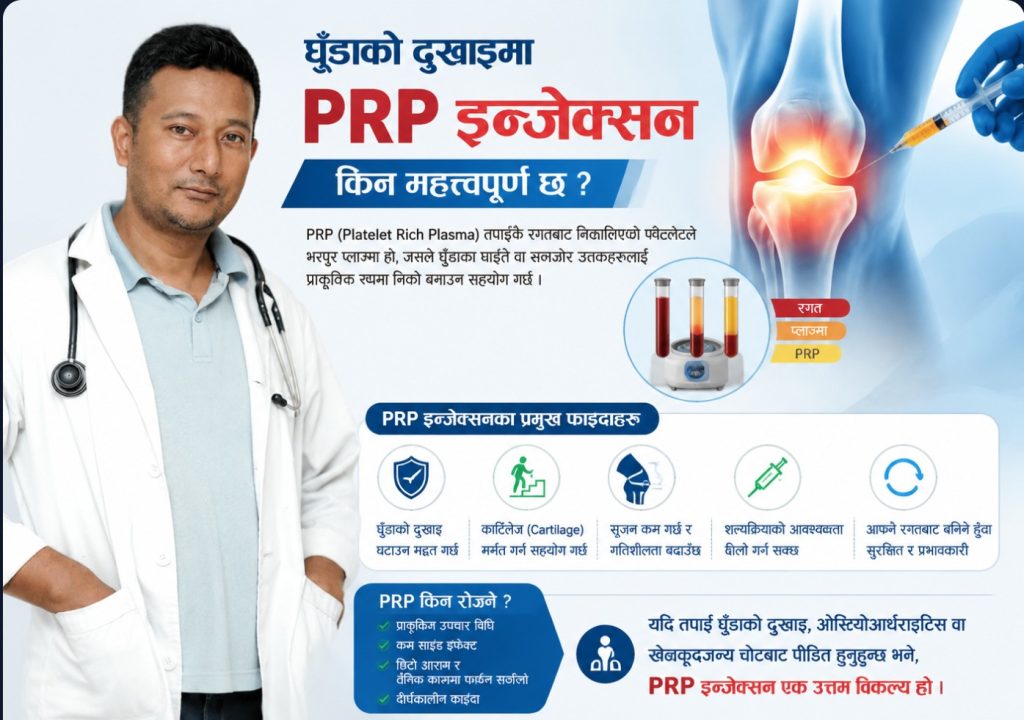
Knee pain is one of the most common problems affecting lots of people of all ages. PRP for Knee pain is now a days common injection for it. Knee pain can occur due to many reasons at different stages of life. Mostly, the pain in the knee is more common after 50.
The major causes of this pain in the knee are found due to osteoarthritis in old aged ones. Besides other types of arthritis, sports injuries, ligament damage, obesity, or overuse of the knee joint are also causes of it. Chronic knee pain in life often affects mobility, daily activities, work performance, and overall quality of life.
In recent years, PRP injection for knee pain has become one of the popular treatment options for patients seeking natural healing and long-term pain relief without surgery. Platelet-Rich Plasma (PRP) therapy is a new and advanced regenerative treatment now a days that it uses the body’s own healing components to repair damaged tissues and reduce inflammation.
What Is PRP Injection?
PRP simply means Platelet-Rich Plasma in short. Platelets are those specialized blood cells in our blood that play a major role in regenerating new tissue aids in healing and repairing damaged tissue. They contain lots of growth factors and proteins that help regenerate damaged tissues automatically.
A small amount of the patient’s blood is collected beforehand, and then it is processed using a centrifuge machine in order to separate concentrated platelets from other blood components. The concentrated platelet-rich plasma is then injected into the affected knee joint under sterile conditions.
The main goal of PRP injection is to stimulate natural healing, reduce inflammation, and improve joint function.
How Does PRP Injection Help Knee Pain?
PRP therapy basically works by enhancing the body’s natural healing process in the affected part. The growth factors present in platelet-rich plasma fluid help repair injured tissues and reduce joint inflammation.
Major Benefits of PRP injection for knee pain include:
- Reduced knee pain
- Decrease Knee swelling
- Faster cartilage tissue healing
- Reduced inflammation
- Improved joint movement
- Better mobilization
- Delayed progression of arthritis
- Provide lubrication in the knee joint
- Reduced need for surgery in some patients
For the best outcome and result, PRP injections are commonly used for patients with mild to moderate knee osteoarthritis and sports-related injuries.
Conditions Treated with PRP Knee Injections
Nowadays, PRP therapy is widely used in orthopedic and sports medicine practice as regenerative medicine. The following are the most common conditions treated with PRP Injections.
Knee Osteoarthritis
One of the most common uses of PRP therapy is now for degenerative knee osteoarthritis. Not only this it is also used for secondary osteoarthritis. PRP may help reduce pain and stiffness associated with cartilage degeneration.
Ligament Injuries
PRP injections can support faster healing in ligament injuries. Knee ligaments, such as partial ACL or MCL injuries and sprains, treated with PRP therapy, have better results.
Tendon Injuries
Patients with chronic tendon inflammation around the knee may benefit from regenerative PRP treatment.
Sports Injuries
Athletes often use PRP therapy to improve and speed recovery from muscle, tendon, and joint injuries.
Chronic Knee Pain
PRP can also help people with persistent knee pain that does not improve with medications and physiotherapy.
Procedure of PRP Injection
The PRP injection procedure is not complicated. It is just a simple procedure and minimally invasive. It’s a daycare procedure and has faster healing. The major steps in this procedure include
Step 1: Blood Sample Collection
A small amount of blood is being drawn from the patient sometimes before a planned Procedure. > It’s better to do it 30 mins before
Step 2: Platelet Separation
The blood sample is then taken to the lab and placed in a centrifuge machine. This machine separates platelet-rich plasma from other blood components.
Step 3: PRP Injection
The concentrated PRP is taken and then carefully injected into the affected knee joint. In some cases, ultrasound-guided injection may be used for accurate placement.
The whole procedure usually takes less than one hour, and patients can easily return home the same day.
Advantages of PRP Therapy
PRP injection offers several benefits. The major benefits are as follows
Natural Healing Process
Since PRP uses the patient’s own blood, the risk of allergic reaction or rejection is very low.
Minimally Invasive Treatment
PRP is a non-surgical procedure that does not require hospitalization or major recovery time.
Reduced Dependence on Painkillers
Some patients experience reduced need for long-term pain medications after successful PRP therapy.
Faster Recovery
Athletes and active individuals may recover more quickly with regenerative treatment support.
However, PRP injection therapy may not be suitable for severe joint destruction or those with advanced bone deformity. Proper orthopedic evaluation and examination are very important before this treatment.
Are PRP Injections Safe?
Yes, the PRP injections are considered safe as the treatment uses the patient’s own blood components and there is less likely chance of reaction.
Possible temporary side effects may include:
- Mild swelling
- Pain at the injection site
- Temporary discomfort while walking
- Minor bruise at the injection site (seen a day or two after and stays for a few days)
Serious complications are rare when it is performed under proper sterile conditions by experienced orthopedic specialists. However, there can be a risk of joint infection after this injection in a very small percentage.
The orthopedic surgeon will explain well about the safety and complication about it before the procedure.
PRP Knee Injections by Dr. Saroj Kumar Suwal
Dr. Saroj Kumar Suwal is an orthopedic surgeon in Nepal, and he specializes in PRP (Platelet-Rich Plasma) therapy for people who are suffering from knee arthritis, sports injuries, ligament damage, and chronic joint pain.
This regenerative orthopedic treatment is now popular because it is minimally invasive and may help to delay knee surgery in selected patients.
Final Thoughts
PRP injection for knee pain is a regenerative orthopedic treatment procedure that helps to manage chronic knee problems using a natural healing method. Using the body’s own blood component, it aids faster healing mechanisms. The PRP therapy will reduce pain, improve mobility, and support faster tissue repair without major surgery.
Patients with knee arthritis, sports injuries, or chronic joint pain should consult a qualified orthopedic specialist to determine whether PRP therapy is an appropriate treatment option for their condition.
Leave a Reply